Do Nothing Club
Problem
Constant notifications, endless scrolling, the pressure to always be productive – moments of stillness have nearly disappeared. Even the smallest pauses are filled with consumption and distraction. This ongoing sensory overload not only leads to mental exhaustion but also makes it difficult to recognise rest as something valuable.
Insight
Pausing is becoming less and less intuitive – it has to be relearned. What if doing nothing wasn’t seen as wasted time, but as an essential act of self-care? The Do Nothing Club reframes stillness as something intentional and meaningful and opens up a new way of engaging with our minds.
Approach
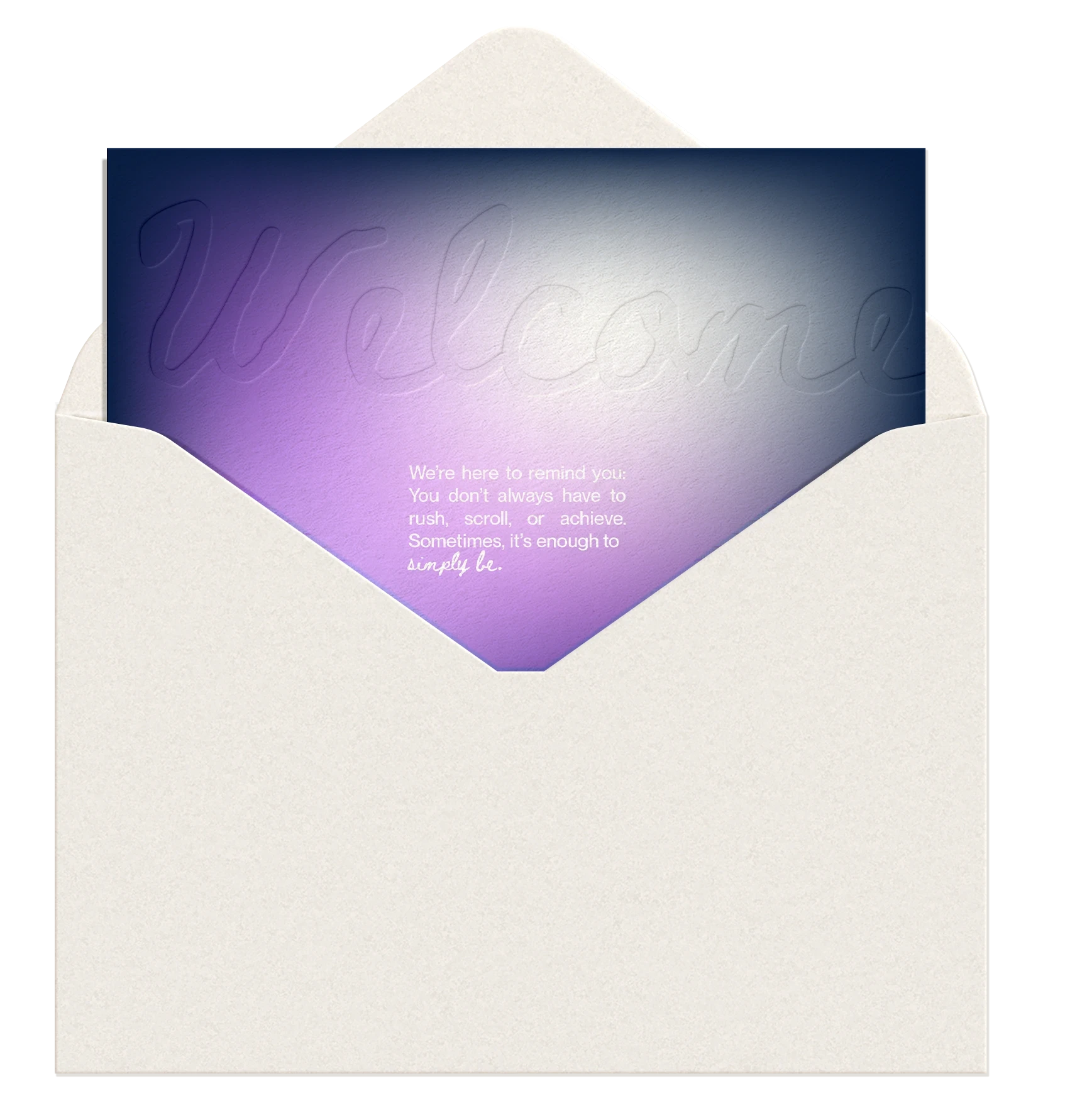
The Do Nothing Club was developed as a visual and narrative invitation to pause. Across print, and social media, the project introduces small, accessible moments of stillness into everyday life.
Visual Concept
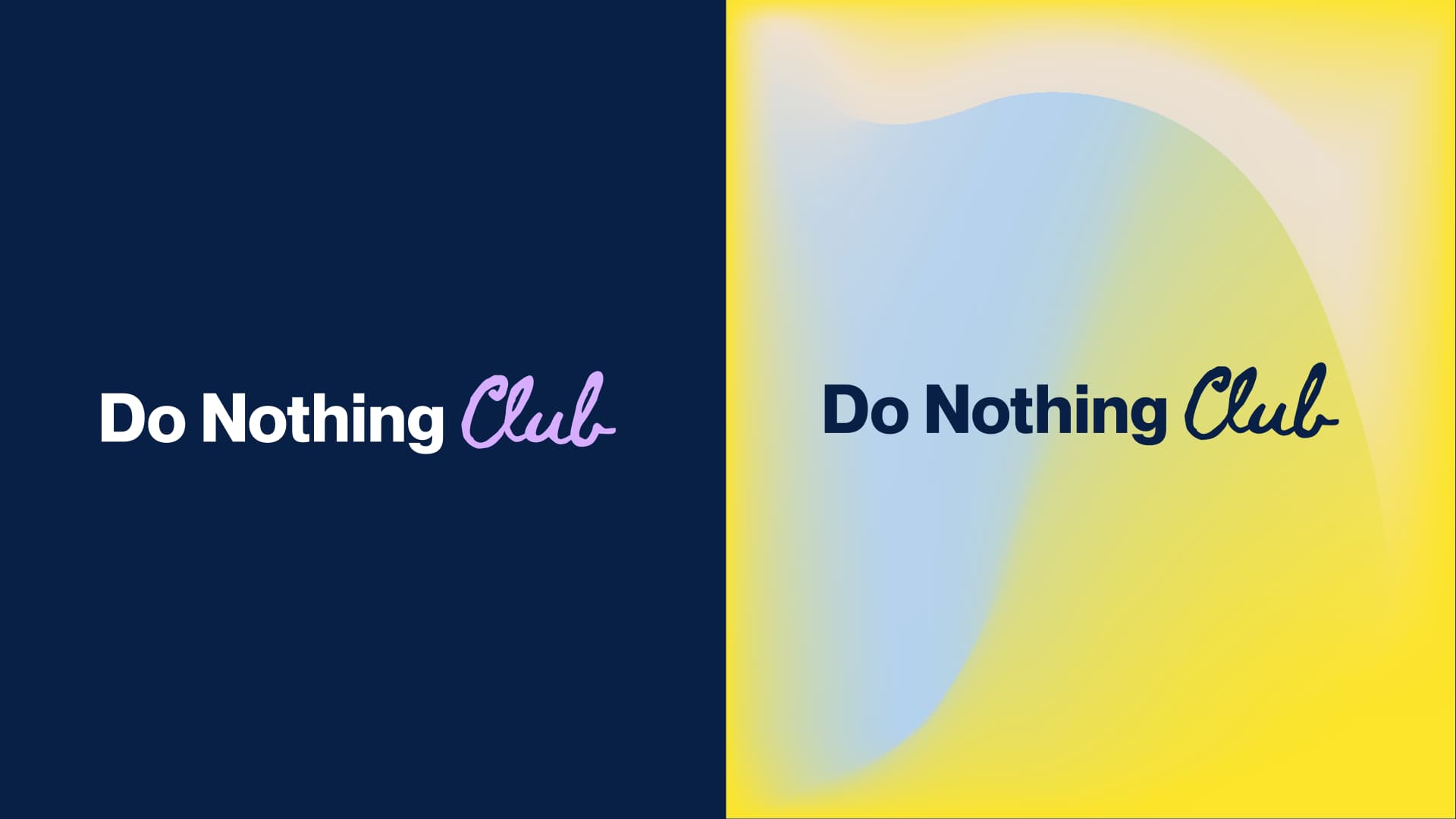
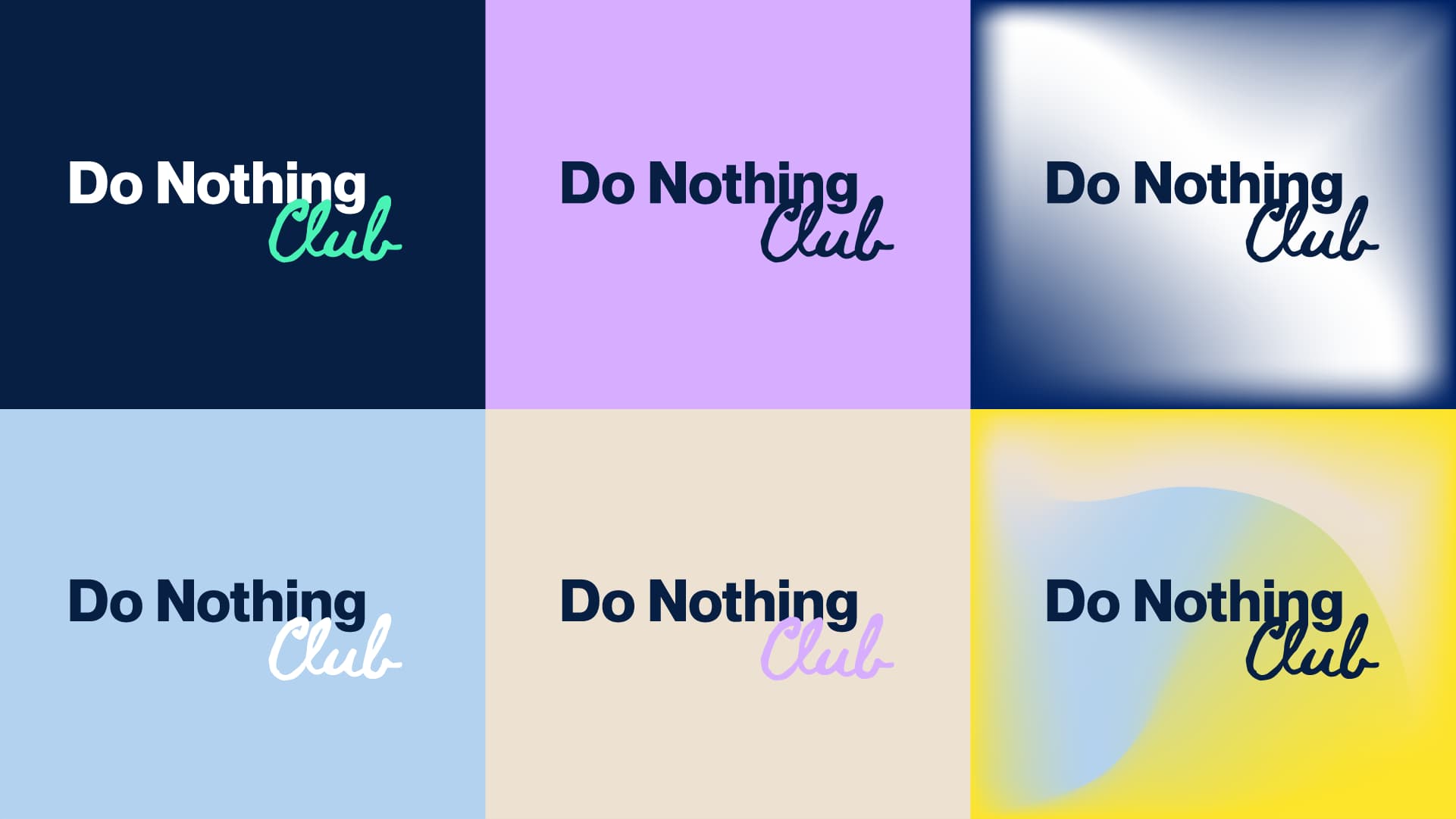
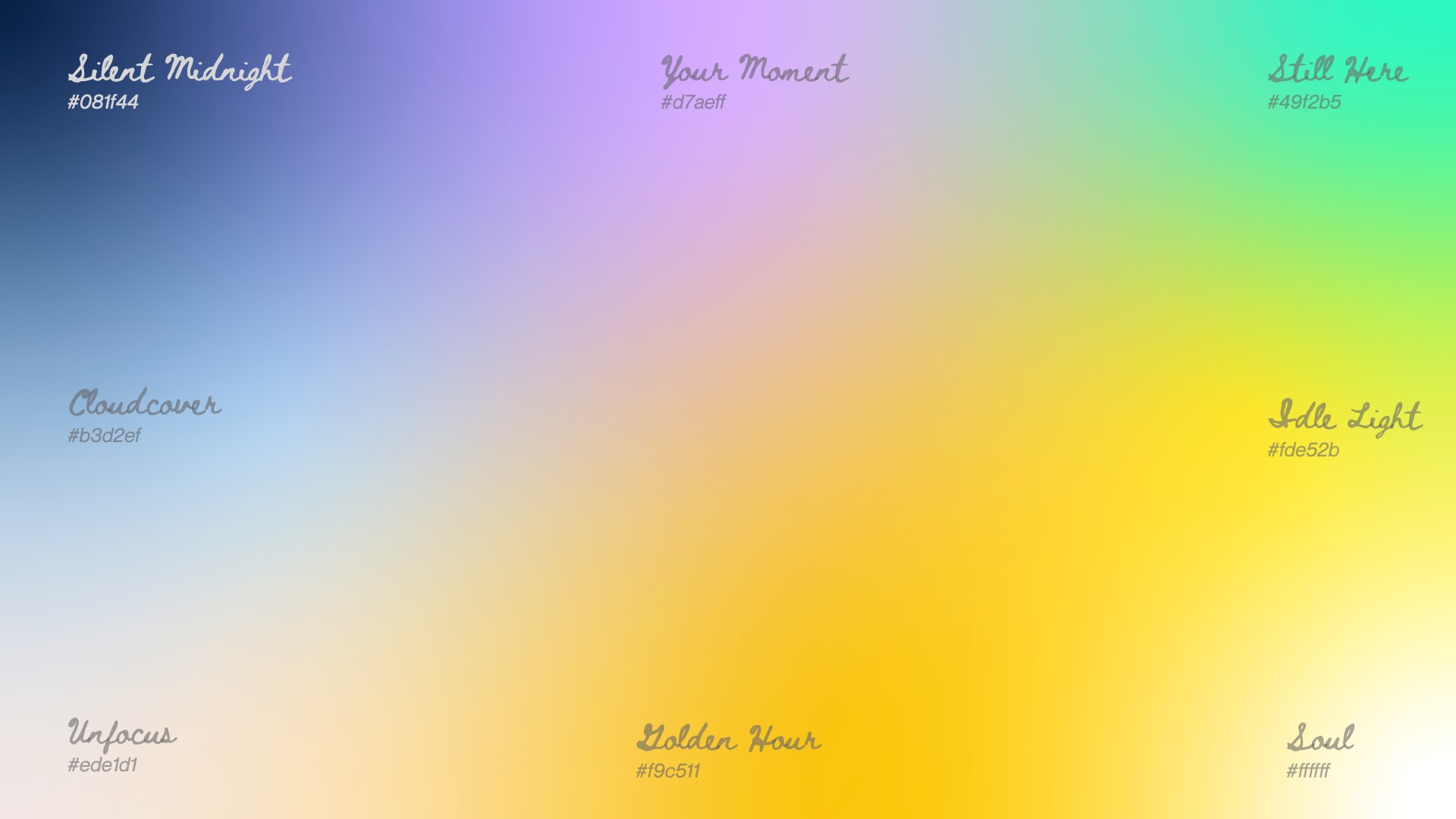
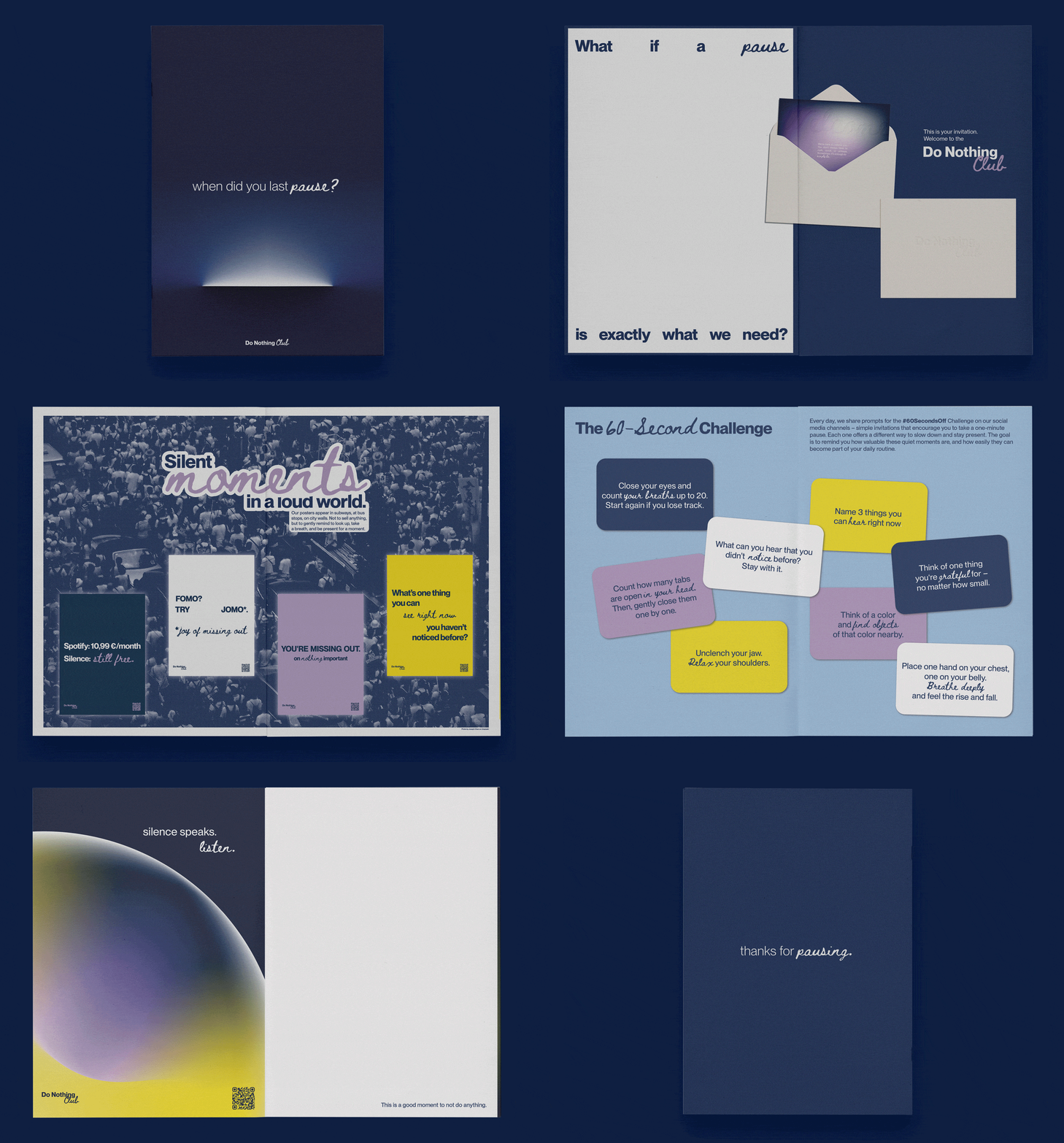
Through a calm and reduced design language – soft gradients, generous white space, and a mix of clean sans serif and personal handwriting – the identity creates a quiet counterpoint to the surrounding noise.
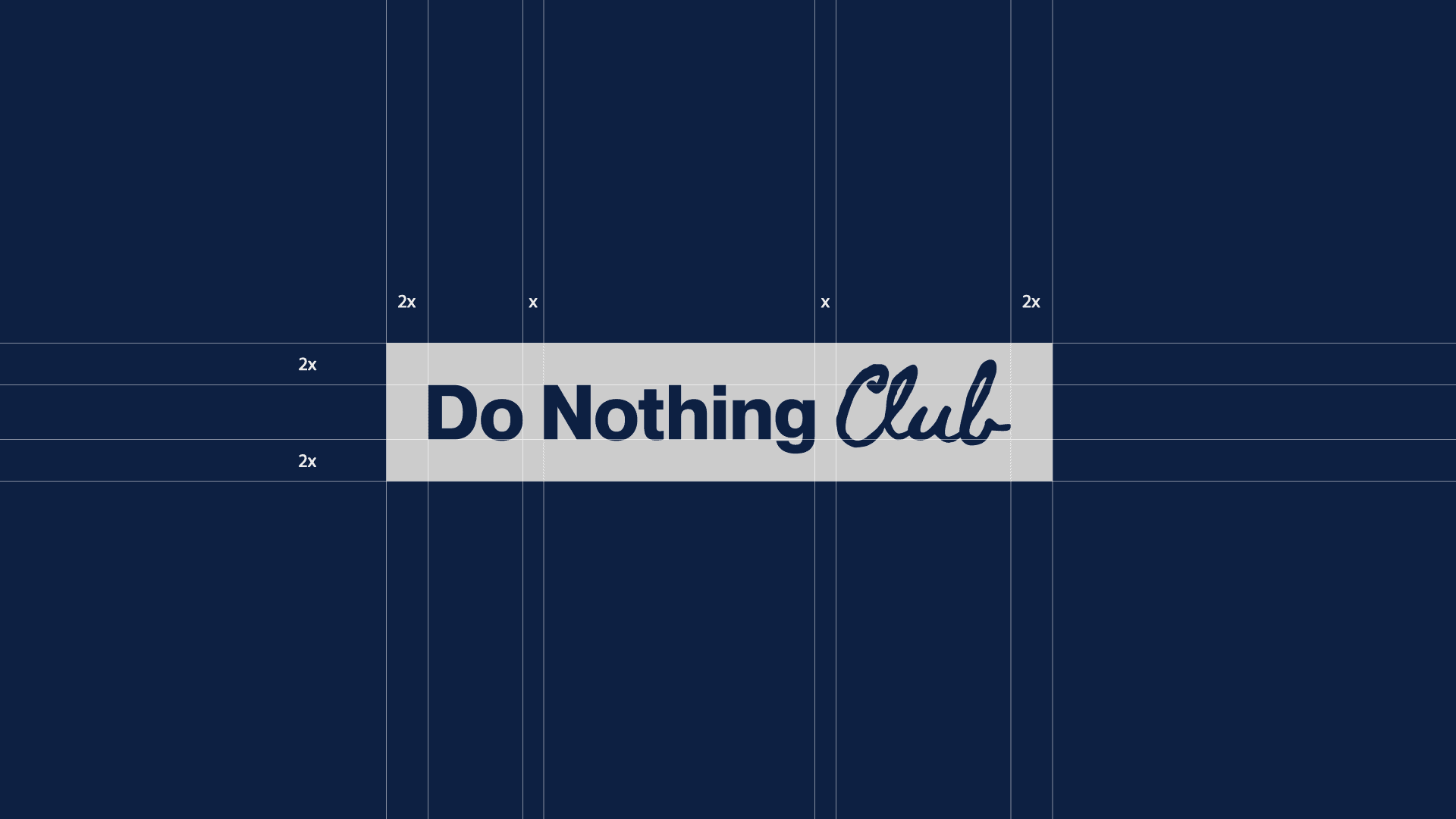
Logo, Colors, Typography
Gentle gradients and muted tones create a sense of lightness and ease, avoiding any visual overstimulation. This is paired with a clean sans serif typeface that ensures clarity and structure, while a handwritten element adds a human, intimate touch.

Do Nothing Club on the go
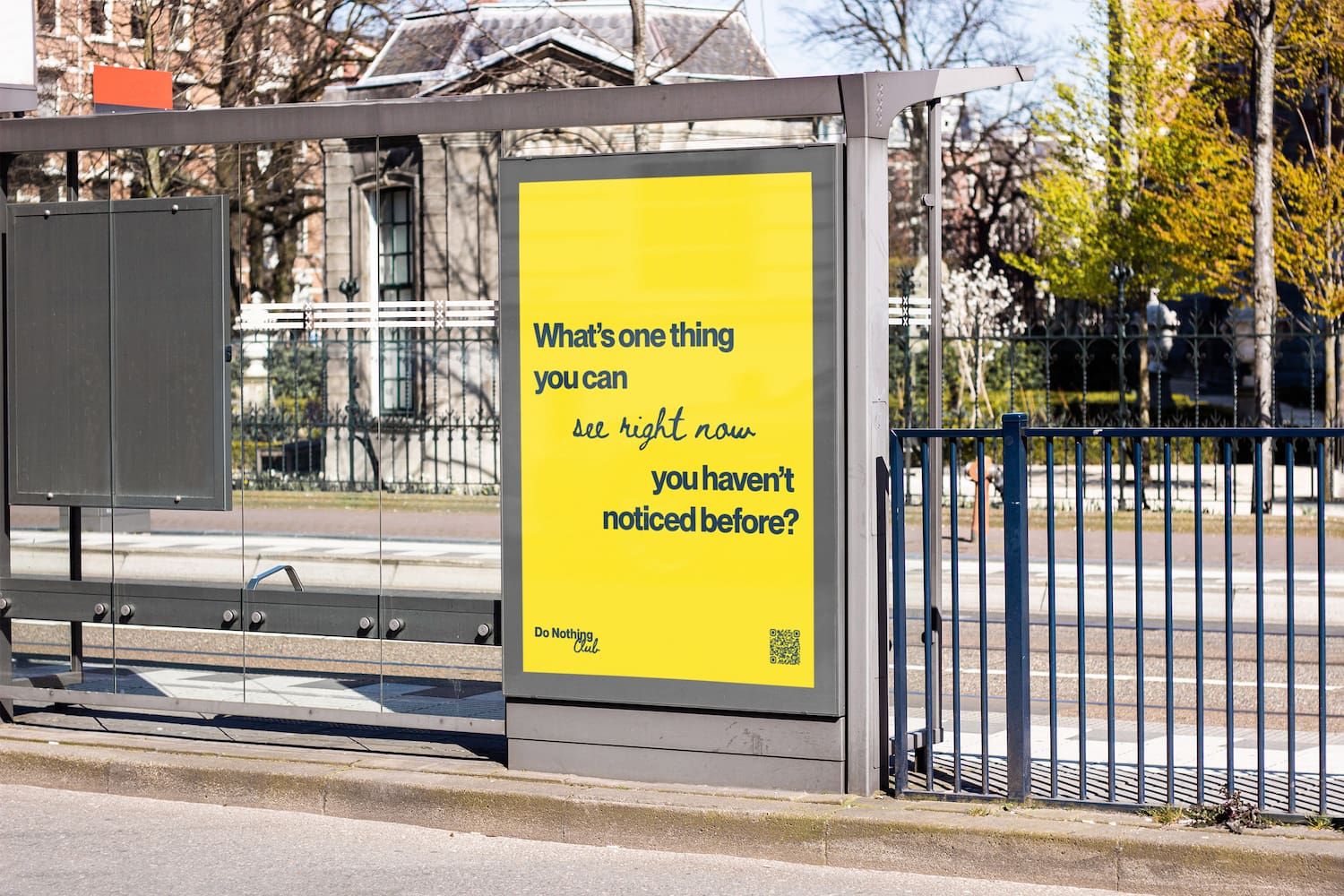
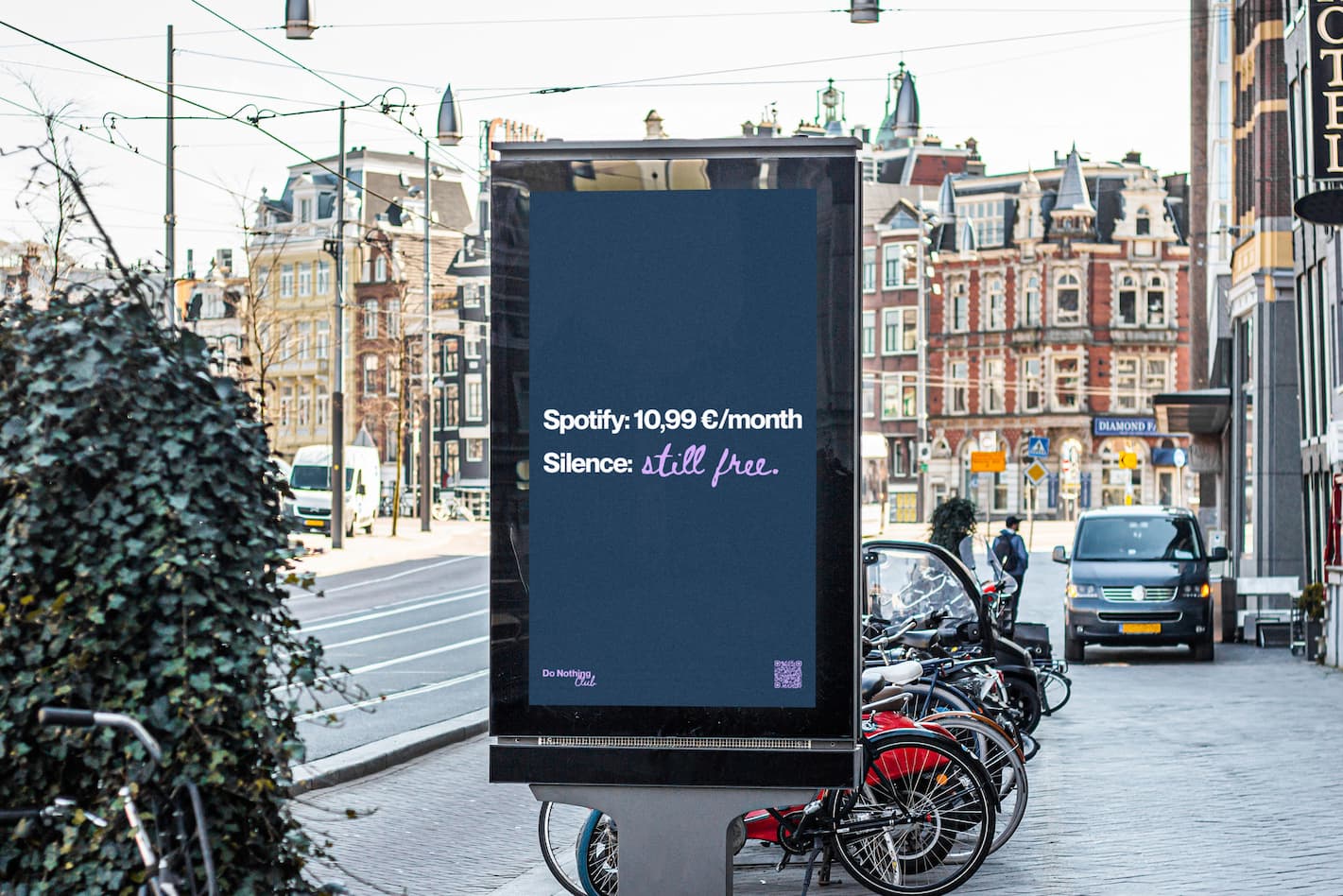
In public spaces, the Do Nothing Club appears on posters and on shop windows. Through clear, minimal messages, it creates small islands of calm within the constant flow of advertising. Each placement becomes a gentle invitation to pause, take a breath, and simply do nothing.
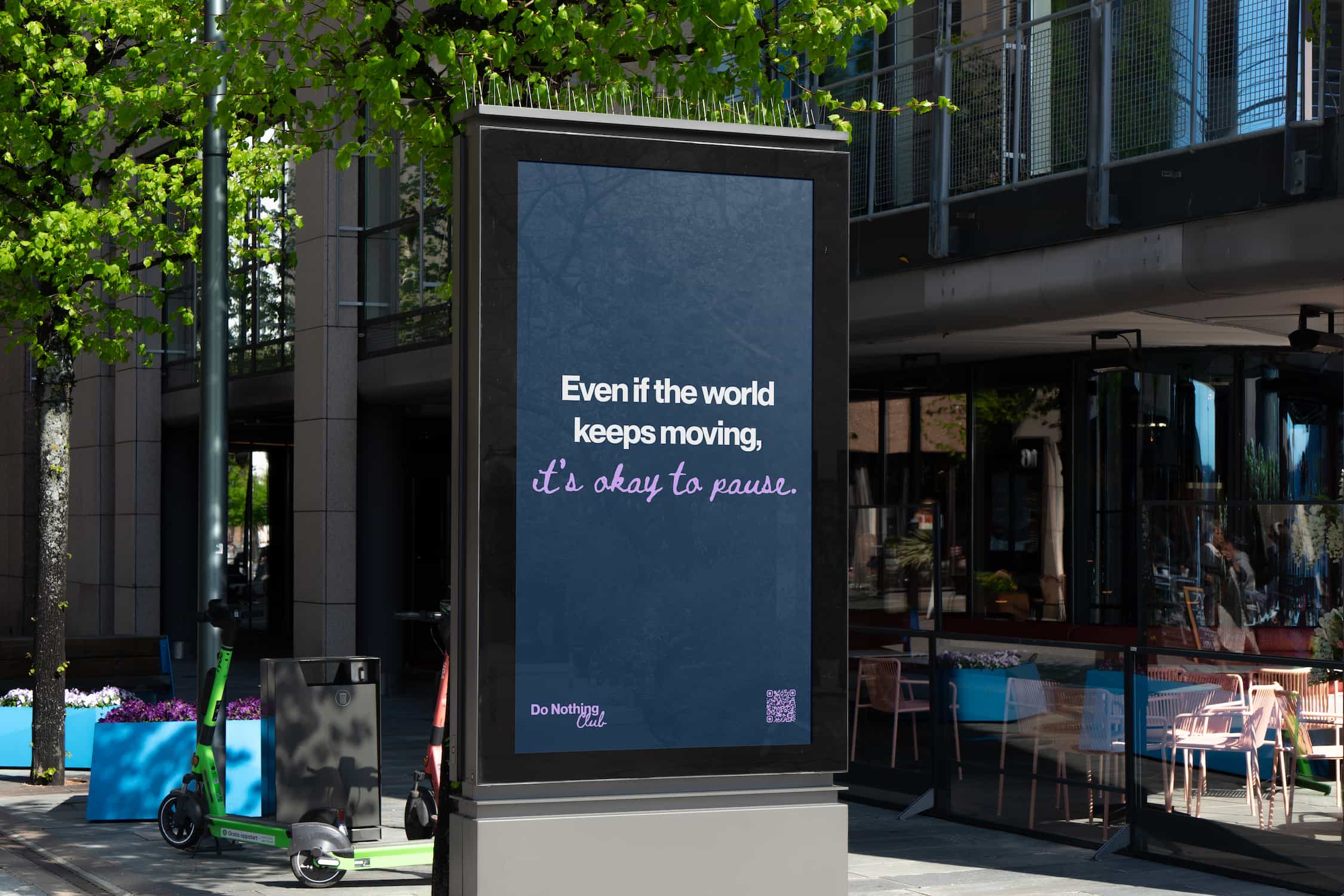
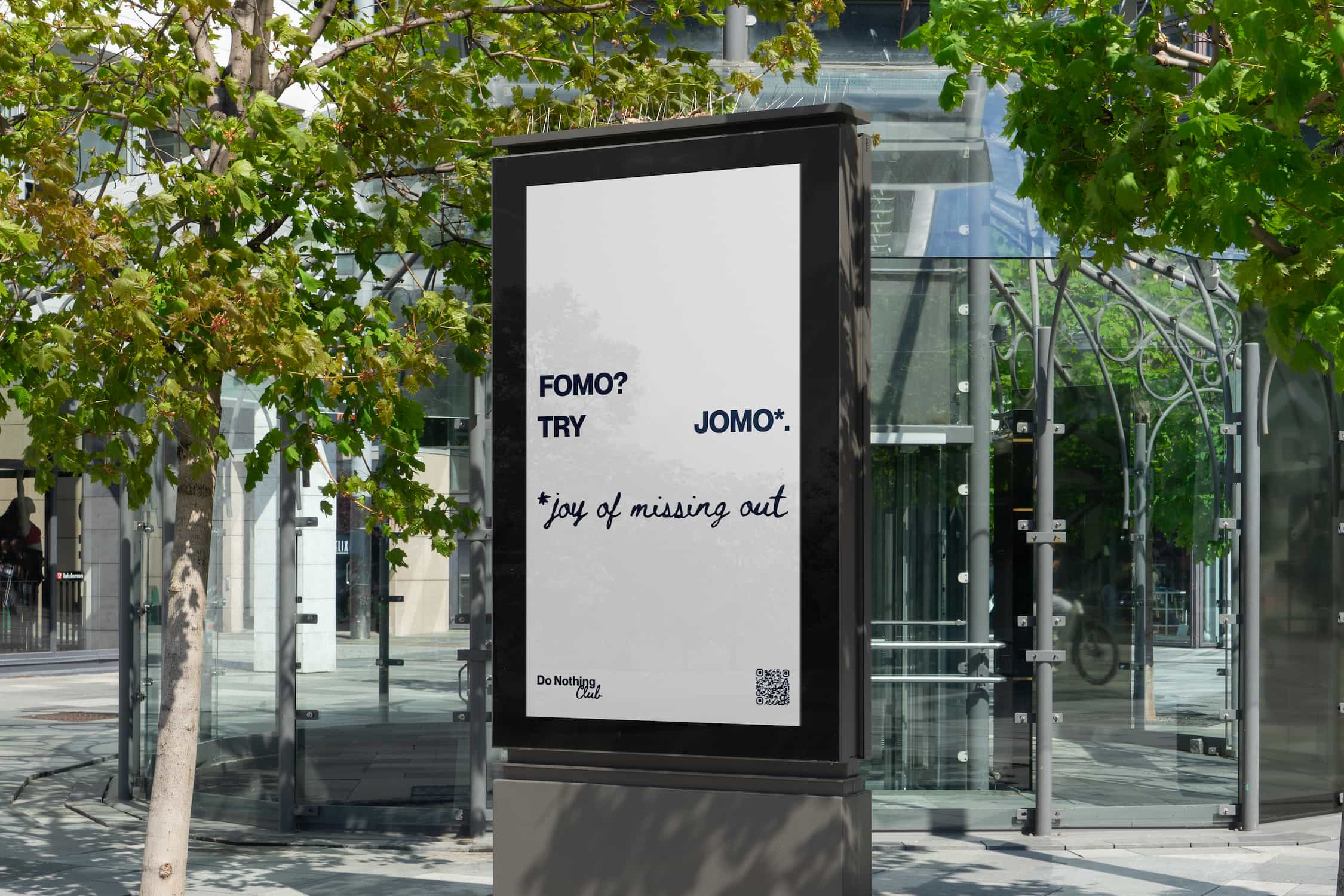
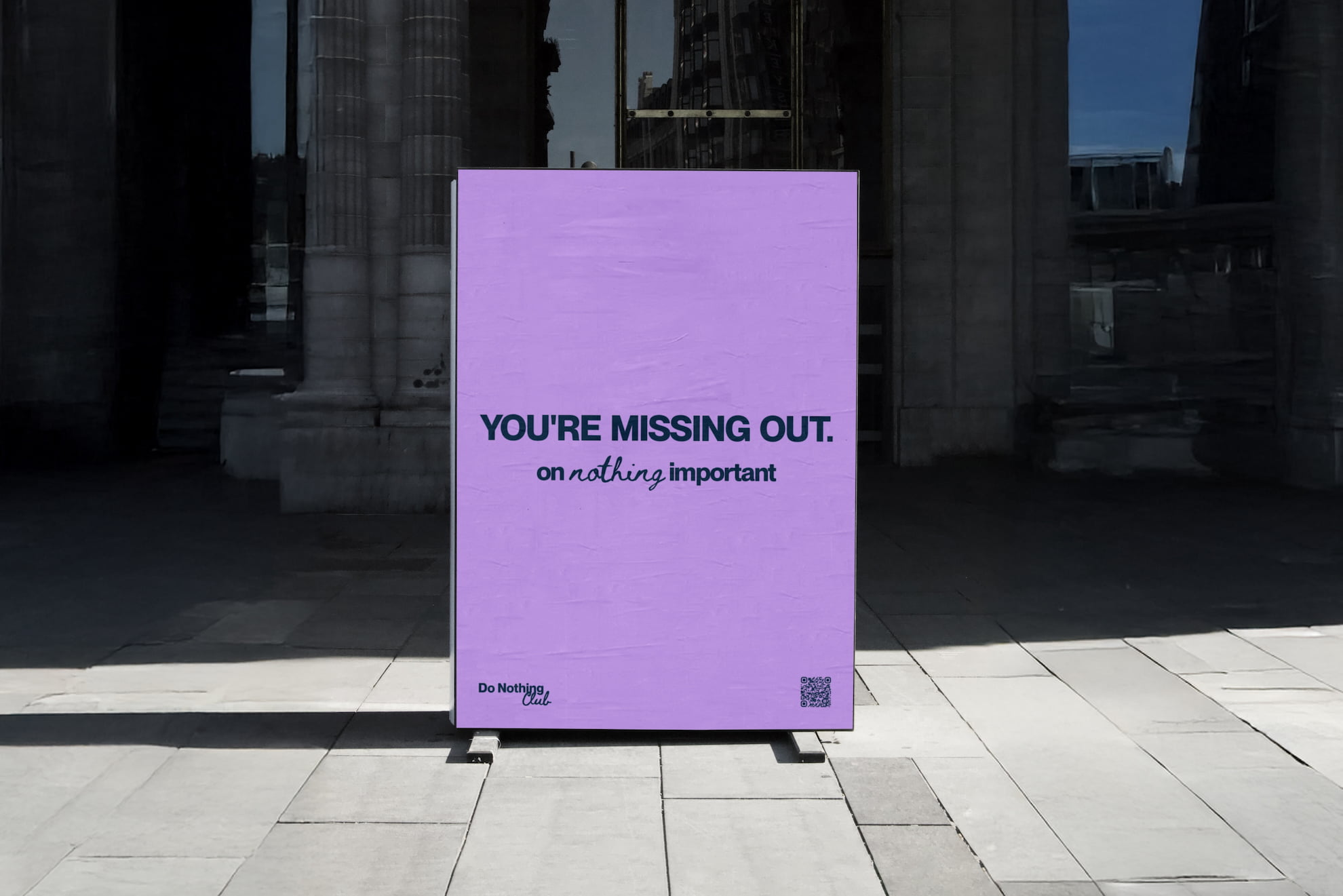
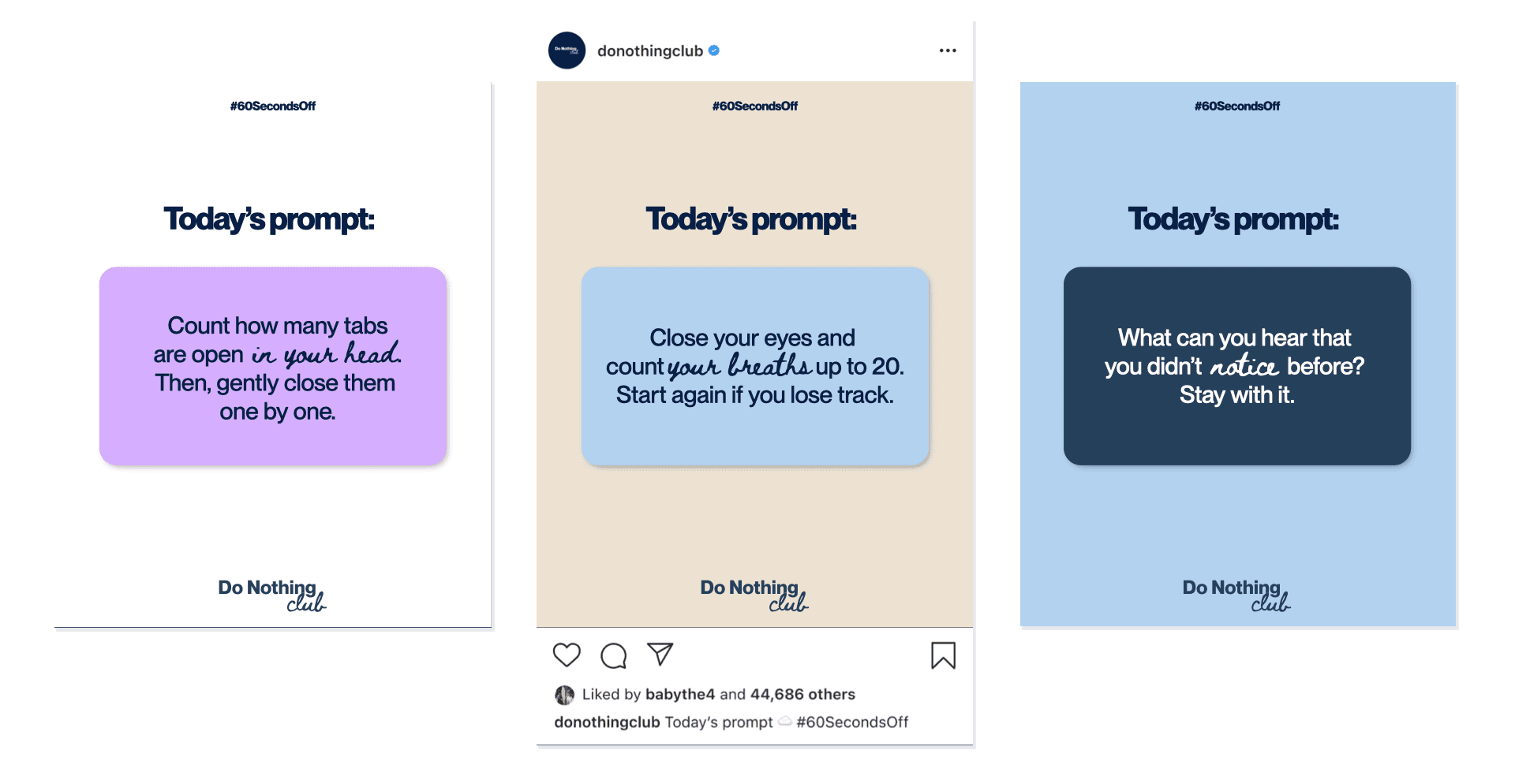
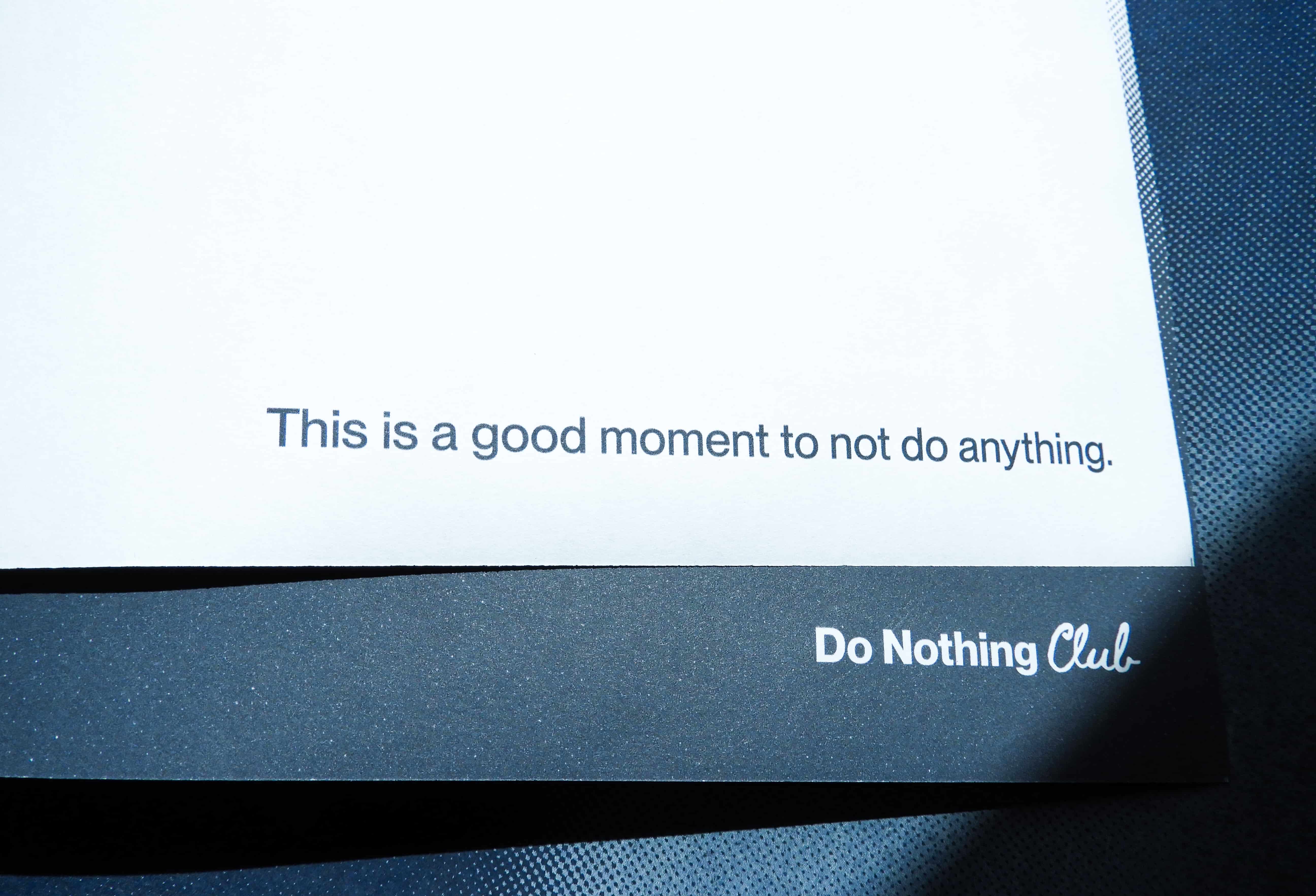
Traditional media can also convey the message. For example, newspapers or magazines where full pages serve as invitations to pause.
Social Media
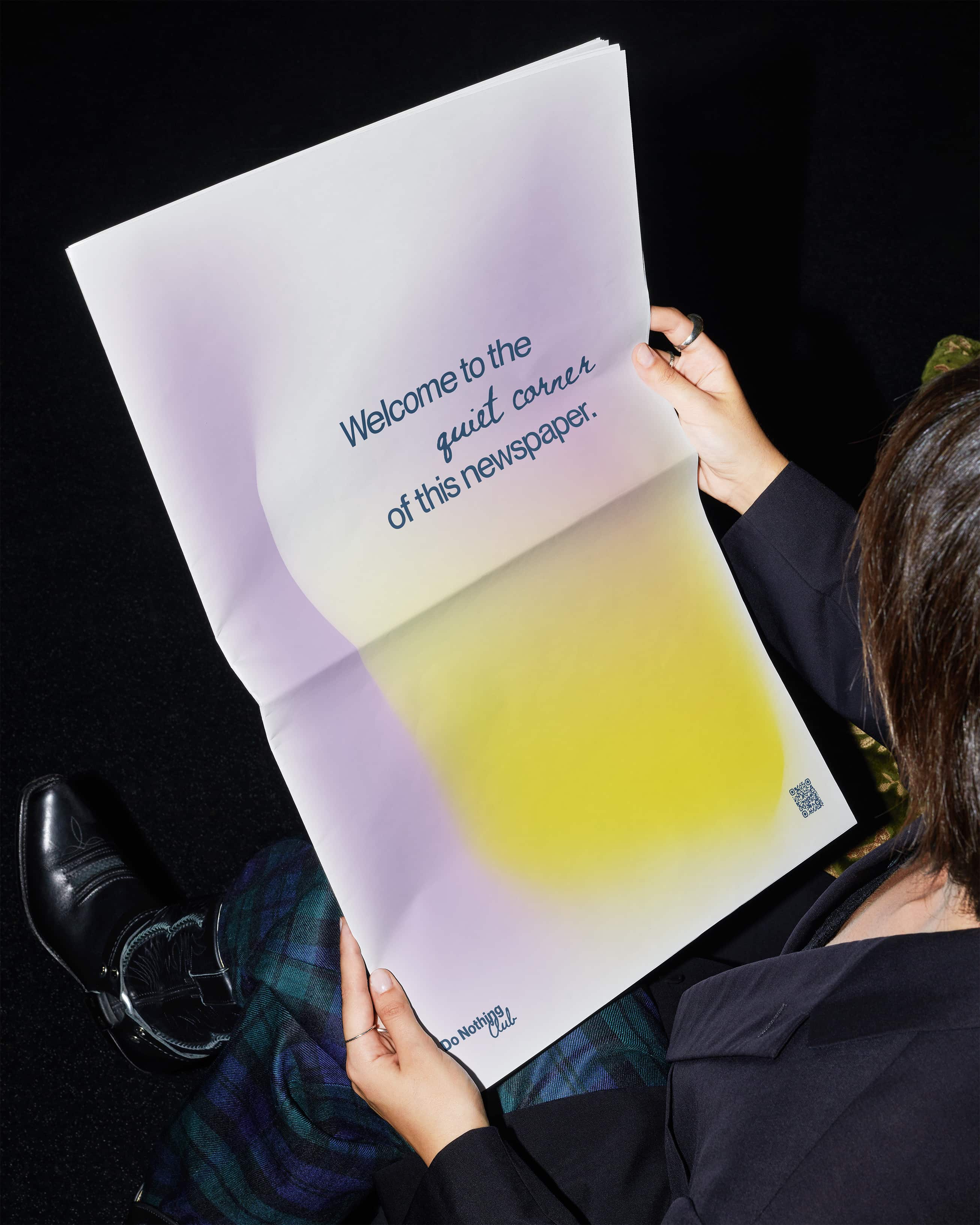
Online, the club offers daily inspiration through the #60SecondsOff Challenge: simple tasks, thoughts or questions that encourage people to pause for a moment. In this way, the club becomes a digital gathering place where people from all over the world can briefly slow down at the same time – no matter where they are.
Newspaper Edition
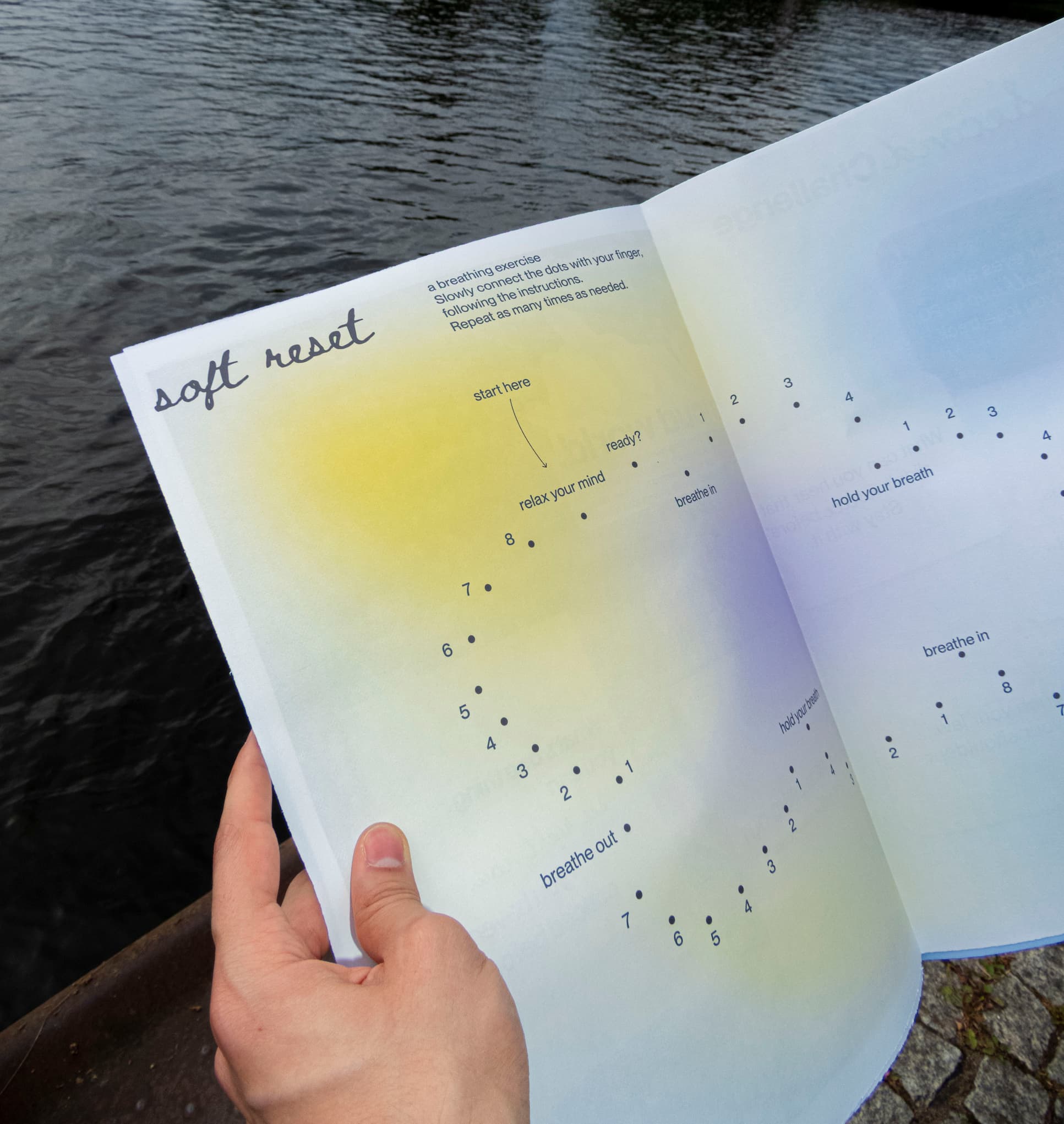
As an homage to traditional print media, the newspaper tells the story behind the project. The middle spread of the publication guides the reader through a breathing exercise that can be used as a poster.
This project was developed as part of an art direction course led by Prof. Sven Völker at the University of Applied Sciences Potsdam.