Words leave stains
Problem
Because communication in familiar environments feels safe and informal, language is often used without reflection. This leads to a normalization of hurtful or passive-aggressive remarks, whose long-term effects are rarely acknowledged. Unlike physical harm, this kind of damage is invisible, which makes it easy to dismiss or overlook entirely.
Insight
Some things can't simply be washed away. The campaign is built on the idea that words leave marks. Just as a stain on white fabric resists being fully removed, careless language embeds itself in memory and can shape how someone feels about themselves over time. What seems forgettable to the speaker rarely is to the one who heard it.
Approach
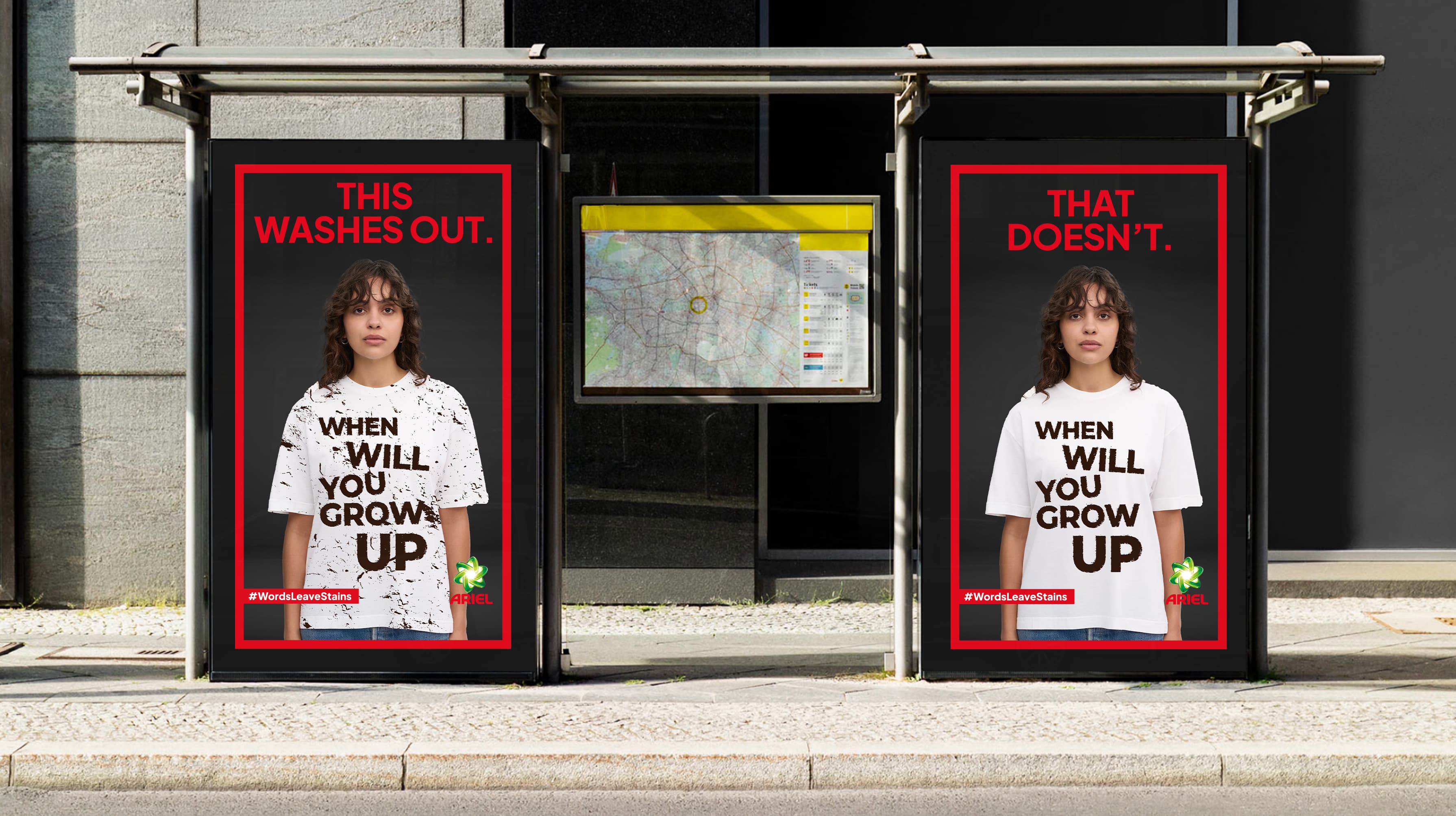
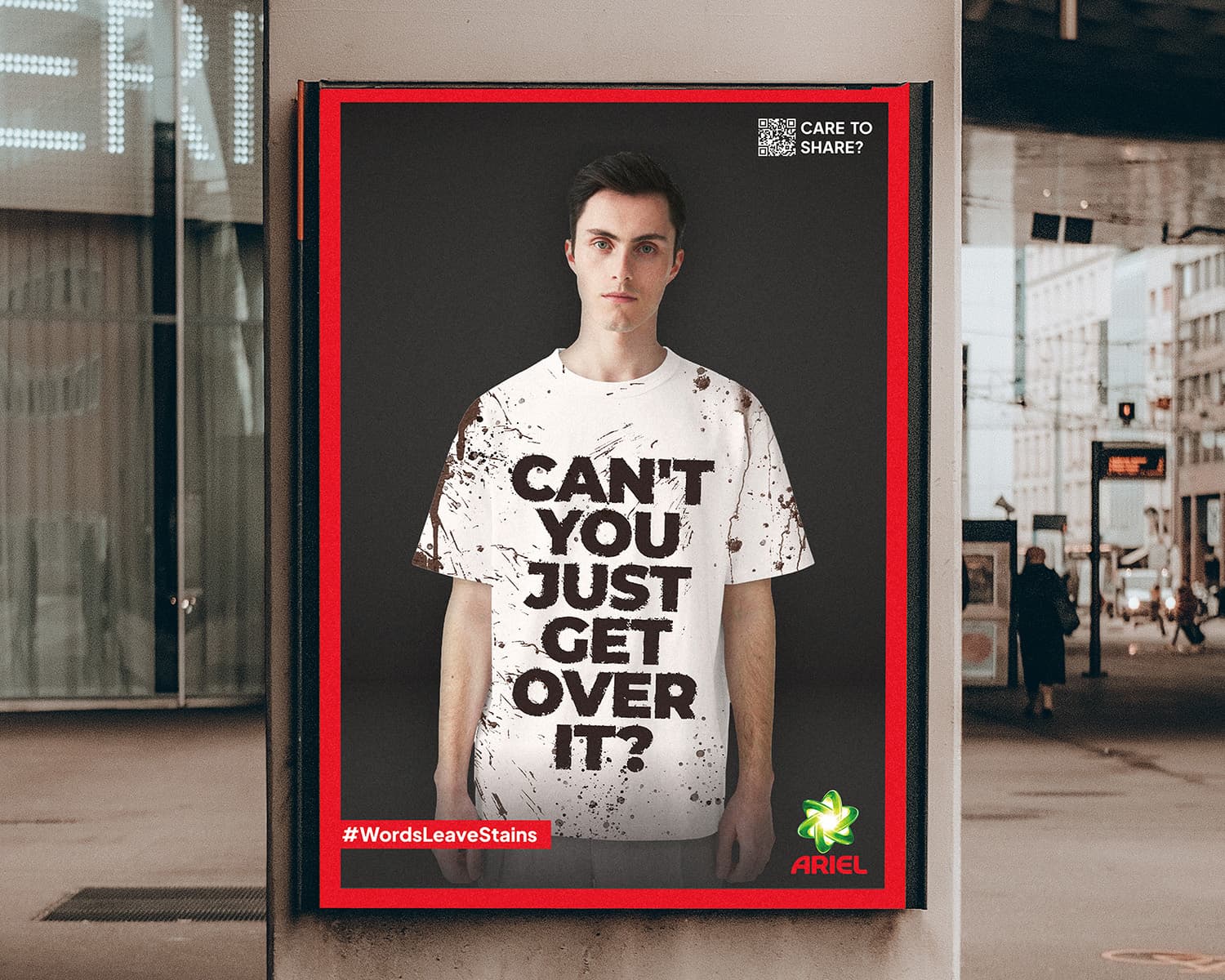
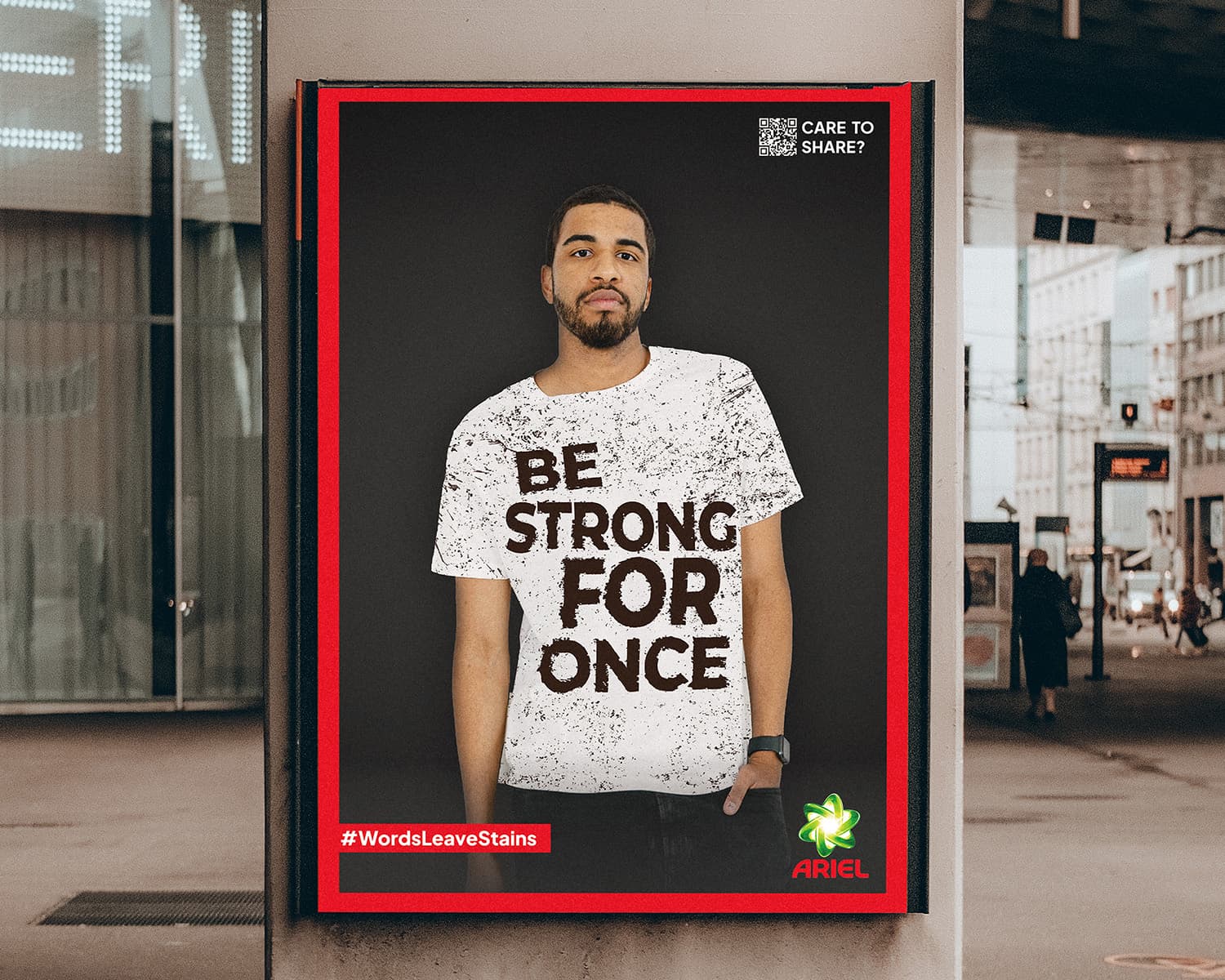
The campaign is built on the idea that words leave permanent traces. In collaboration with the detergent brand Ariel, stains on white clothing are used as a visual metaphor to translate emotional impact into something tangible. People are shown wearing white T-shirts marked with hurtful statements that seem impossible to fully wash away. Even after attempts to clean them, the words remain, reinforcing the message that language cannot simply be taken back.

Posters
The campaign puts people at its center. Individuals wear plain white T-shirts onto which hurtful, passive-aggressive or dismissive phrases appear like stains, confronting viewers with language they may recognize from their own lives.

The Stain Gallery
The campaign’s online platform invites everyone to participate by sharing a sentence that has stayed with them. Users enter the words that “stained” them and answer four guiding questions. Afterwards, they are presented with a gallery showcasing all submitted sentences.
By collecting these personal experiences, the platform creates a collective archive of the emotional weight of language. Visitors can read and reflect, turning the campaign into an interactive space where the invisible impact of words becomes visible.

This project was developed as part of a campaigning course led by Prof. Matthias Beyrow at the University of Applied Sciences Potsdam.